7 Rules For Filtering Stocks |
The stock market has thousands of companies you can invest in. However, the vast majority of these stocks are simply noise. For the long-term investor, only a tiny fraction of available businesses meet the criteria for excellence. To outperform the market, a strict framework is required to filter out distractions and focus on high-quality fundamentals. Here are seven practical lessons for analyzing stocks and building a high-conviction portfolio.
Brought to you by: Stock Unlock. |
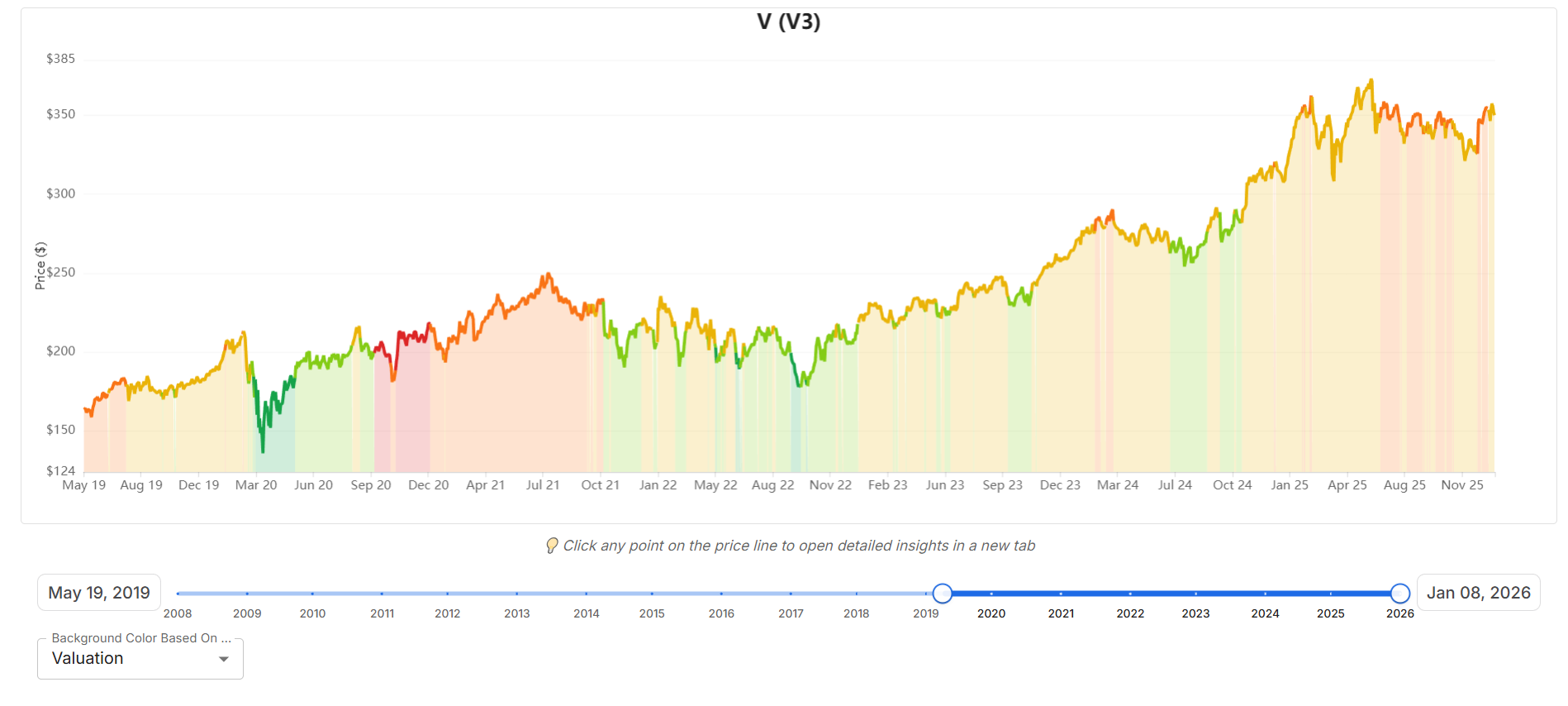
Coming Soon: Historical Insight Charts (Beta) |
We’re about to roll out Historical Stock Score Charts on Stock Unlock (web and desktop). This has been our most requested feature by far, and will allow you to see a stock's fundamental and valuation score throughout history. It will give you insights into how strong the business's fundamentals are and how attractive its price is today. |
The Risk of Paying Up for Quality |
|
|
Quality is a primary goal for many investors, but it must be managed with care. Paying a high Price-to-Earnings (P/E) ratio for a great business only works if the earnings are resilient. If a multiple is high and earnings decline, the stock becomes significantly more expensive even if the price drops.
This risk is high when a company is "over-earning" due to temporary trends (think of lockdowns and home-related companies during 2020 and 2021). An investor must be certain of the sustainability of a company's profit before paying a premium. Before paying up, ask yourself whether earnings will revert to the mean, or not. |
Turnarounds Rarely Turn Around |
Statistical analysis shows that turnaround plays have a 95% failure rate. Struggling companies, legacy retailers, or distressed industrials often look attractive because they are cheap. Some investors might like these situations. But the time and capital required to fix a broken business are immense. These investments often lead to long-term operational problems and management turnover. It is more efficient to stick to companies that are already excellent. Discipline means looking away from a low price tag when the business itself is messy.
|
Founder-Led Management and Ownership |
High insider ownership is a significant indicator of long-term success. When a founder or a management team owns a large percentage of the stock, their incentives align with the shareholders. They treat the company’s capital as their own.
Founder-led companies often show better efficiency and a focus on long-term shareholder returns. A minimum insider ownership of 3% to 5% is a strong sign of accountability. These leaders are more likely to make bold, rational decisions for the next decade rather than the next quarter. This alignment is even more important for industries that change quickly. And industries that are disrupted by AI.
|
It is a mistake to believe that a retail investor can effectively monitor 100 different stocks. True research requires reading reports, listening to earnings calls, and tracking competitors. There is simply not enough time in a day to do this for a massive portfolio.
A concentrated portfolio of 10 to 25 stocks is the key to deep conviction. Research suggests that after 12 holdings, the benefit of diversification decreases significantly. Concentration allows an investor to understand crucial changes quickly. Diversification beyond a certain point is often a substitute for a lack of knowledge. |
The ROIC Consistency Test |
Return on Invested Capital (ROIC) is the ultimate metric for measuring a company's moat. A 10-year track record of ROIC above 15% proves consistent value creation. It shows that the business can reinvest its own cash at high rates of return. Focus on companies with ROIC > 15%. |
Pricing Power and Gross Margins |
In an inflationary environment, pricing power is a necessity. And companies with pricing power will outperform the ones that do not. A business must be able to raise its prices without losing its customers. A gross margin above 60% suggests the company has some signs of pricing power. Ideally, you want a business to raise prices by 3% or 4% annually at a minimum to offset inflation. |
A clean balance sheet is the best insurance for survival. In a rising market, people ignore the balance sheet. But in a crisis, it is the only thing that matters.
As Warren Buffett said, “Cash is to a business as oxygen is to an individual: never thought about when it is present, the only thing in mind when it is absent.”
A business with minimal or no debt can survive economic crashes that bankrupt its competitors. Survival is the first rule of compounding. By focusing on simple, debt-free balance sheets, an investor makes sure they stay in the game long enough to win. |
The skill of investing is the skill of filtering. Out of thousands of possible choices, only a handful of businesses are worth owning. Success comes from ignoring the 99% of stocks that do not meet these strict standards.
Focus on companies with high ROIC, strong pricing power, and high insider ownership. Keep the portfolio concentrated and the balance sheets clean. |
|
|
This newsletter was written by Christophe Nour. You can find him via YouTube, LinkedIn, view his portfolio on eToro, and join his investing coaching program on Skool.
Additionally, if you have any questions about this newsletter, you can send him an email at: christophe.nour@icloud.com |
|
|
Stock Unlock's newsletter is not a recommendation to buy or sell stocks. Stock Unlock does not provide financial advice, and we are writing this newsletter to help share ideas and teach you more about stock analysis. Please do not buy or sell stocks we discuss without doing your own research and/or consulting with a professional. |
|
|
In addition to providing education around investing fundamentals we are exploring adding value through sending our members stock ideas and analysis. Please let us know if you enjoy this type of newsletter or have any feedback. Let us know what you think by emailing support@stockunlock.com |
|
|
📱 Now Available on iOS and Android |
|
|
Join 4,000+ Investors on Discord |
| |
|
Connect with us on LinkedIn |
| |
|
|