Lessons from Buffett’s Early Investments

Much has been written about Warren Buffett’s investments in recent decades, such as the ones in Coca-Cola and Apple. Most investors also know that Buffett invested heavily in these businesses because of attributes like a durable competitive advantage, reliable management and a fair price. 


However, his early and forming years as an investor are significantly less discussed. Sure, we know he was inspired by Ben Graham and looked for cigar butt situations, but that does not tell us which companies he actually invested in and what the outcome was. A few important investments had a big impact in his early days, and these are worth studying in detail. 


Buffett’s best results also came in this era. In his partnership years between 1957 and 1969, Buffett compounded at 29.5%, or a cumulative 2,800% over those 12 years. 


As we will see, Buffett did this by investing in small, cheap companies. Some of them were huge successes, while others did not work out. Retail investors can learn a lot from these micro-cap investments because they are in many ways more replicable than Buffett’s later buys, so let’s dive in:


Brought to you by: Stock Unlock. 

Read Past Newsletters
 

✨ Product Updates

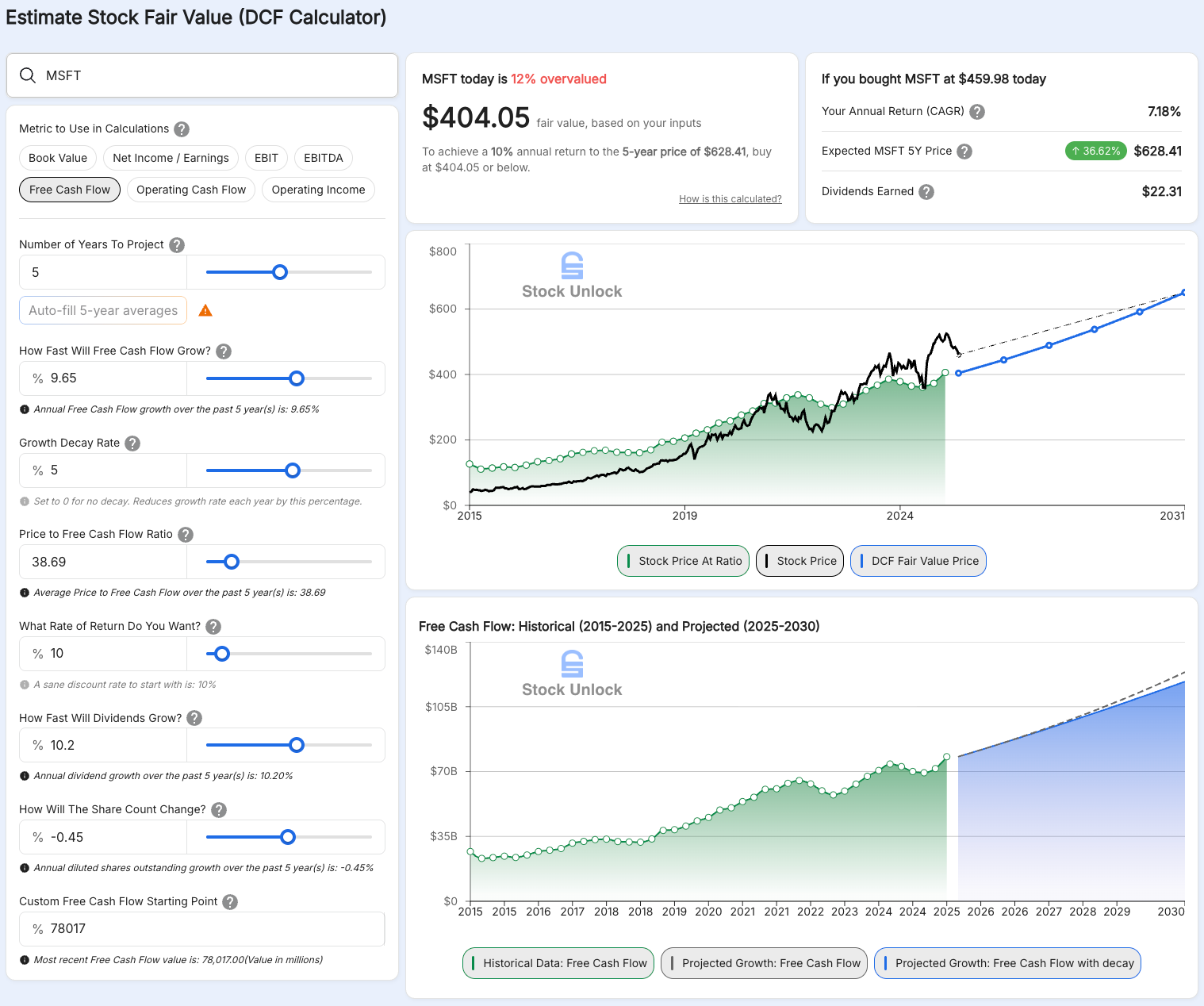
Revamped DCF Calculator (Web)

We’ve rolled out a major upgrade to the DCF Calculator and wanted to share it with you.


What’s new:

  • Growth decay support to model more realistic long-term growth (one of the most requested updates)
  • Clearer, more readable valuation summary up top
  • Simplified inputs with better defaults
  • Less clutter, more signal

We’re actively iterating on this based on real usage and feedback.
Mobile DCF support is on our radar and is actively being worked on.

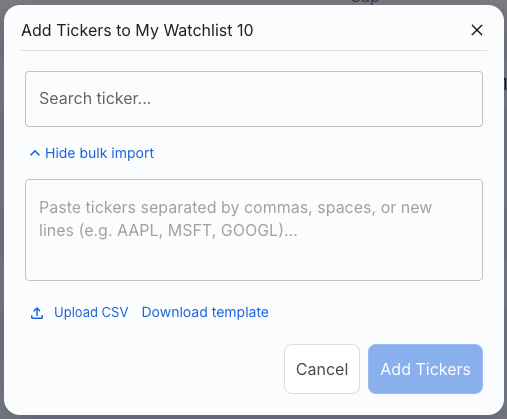
Bulk Import for Watchlists (Web)
You can now bulk import stocks into watchlists instead of adding them one by one. This makes it much easier to migrate from other tools and get set up fast.


Both features are live now on the web app.


Buffett’s Early Mistakes

Cleveland Worsted Mills


Buffett’s purchase of the Cleveland-based textile manufacturer in 1952 was based on a simple thesis. First, the company was selling at a price below the value of its assets while paying a 8% dividend at a seemingly low payout ratio. Second, which was important to Buffett at the time, his mentor Ben Graham also owned the stock. 


The problem was that textile manufacturing was a commodity business with an uncertain future due to increased competition abroad. Further, Cleveland Worsted Mills had also benefitted hugely from a surge in demand during World War II, which made its ROIC and growth figures look attractive at first glance. 


As reality set in, earnings deteriorated and the dividend was soon cut as the company no longer could cover it with its earnings. According to Brett Gardner’s book Buffett’s Early Investments, Buffett likely sold the stock at a loss in 1954. 


The most important takeaway is that a cheap price is not enough to guarantee good returns. Investing in a company trading at less than its assets are worth is only a good investment if management is able to extract the value of the assets. Funnily enough, one of Cleveland Worsted Mills’ shareholders eventually bought enough stock to take control and liquidate the business a few years after Buffett had sold his shares, so long-term shareholders earned a decent return in the end. 


Hochshild, Kohn & Co


Hochshild Kohn was the first company Buffett bought in its full into his partnership. According to Gardner’s book, Buffett paid about 10x earnings to buy this Baltimore department store in 1966, only to sell it at a loss about four years later. While the total return ended up around 20% with the dividends he received over those years, it was a big opportunity cost given Buffett’s record in that era. 


The main problem with Hochshild Kohn was that its flagship location in downtown Baltimore was surrounded by competing stores on each corner. With no room for differentiation, the stores all operated with razor-thin margins as price was the most important consideration for customers. To further complicate the issue, migration to the suburbs caused the addressable market to shrink throughout the 1960s. Hochshild Kohn was simply not a good business. 


Buffett later described this purchase as a mistake in his 1989 letter along with his famous “It’s far better to buy a wonderful company at a fair price than a fair company at a wonderful price” quote. Compared to some of the truly cheap companies Buffett bought early in his career, this investment did not work out because it was a mediocre business bought at a mediocre price. 


There is also an important lesson in thinking about the direction of a company’s moat. Hochshild Kohn clearly had a good name and some valuable real estate, but the store was surrounded by competitors who sold similar items. What might have been a sufficient advantage at one point became less relevant as consumer behavior changed. Even if retailing is a simple business model, it is difficult to predict what the environment will look a decade ahead unless there is a clear, sustainable advantage there. For most of us, that backdrop should automatically put an investment in the “too hard” pile.


What Worked

Philadelphia & Reading


P&R was another company trading at less than the value of its assets and inventory. The company mainly operated in coal mining, a declining industry due to alternative fuel sources and government regulations. 


This story had a different ending that Cleveland Worsted Mills, though. As the business declined, other investors, including Ben Graham, purchased large amounts of shares. The group managed to get a few seats on the board of directors and influence the company to stop mining for coal. 


After liquidating much of the assets and inventory, P&R started buying other, unrelated businesses such as the Fruit of the Loom brand that is now owned by Berkshire Hathaway. Less than 10 years after Buffett bought his first shares, the company had completely transformed from a commodity business to a conglomerate led by investors skilled in capital allocation. Over that decade, the stock price compounded at around 19% annually. 


While Buffett himself did not have much influence in the capital allocation decisions, he learned that having control of a company was the best way to create value. In many ways, P&R’s transformation from a company in secular decline to an M&A machine created the template Buffett would later use with Berkshire Hathaway. 


American Express


American Express accounted for around 30% of the partnership’s assets in 1966. Since Buffett had bought the stock in 1964, the stock had gone up by 30% and 39.2% in the following two years before delivering a monster 89% return in 1966. In other words, it was a massive contributor to the partnership’s overall returns. 


American Express was more or less the definition of a wonderful company temporarily available at a fair price. 


For close to a century, the company had built a reputation as a reliable financial institution, and its credit card launched in 1958 was by far the most popular despite being more expensive than Diner’s Club and other competitors. However, investors feared that this reputation had been severely handicapped after the company’s involvement in the “salad oil” scandal in the early 1960s. 


In short, American Express fell victim to fraud that uncovered a lack of oversight and integrity among some of its employees. It was also uncertain how much the settlement would end up costing shareholders. As the story goes, Buffett visited restaurants and talked to consumers to determine if the scandal had tarnished the brand. What he found was that, despite the stock price selling off, customers did not seem to care. 


When Buffett bought the stock at around 15x earnings in 1964, it was one of the more expensive purchases based on valuation multiples he made in the partnership years. However, once he became comfortable with the expected outcome of the scandal, the valuation was quite appealing for what was a highly competitively advantaged company.


American Express’ fundamentals grew much faster than the market expected in the following years, and the number of cards outstanding continued to grow double-digits despite price increases. The scandal had been a big deal on Wall Street and in financial media, but it clearly did not impact how consumers viewed the company. There is an important lesson in there that many of the day-to-day headlines are irrelevant over the long run. 


Lastly, it is interesting that the 10x earnings Buffett paid for Hochschild Kohn turned out to be expensive while the 15x earnings American Express traded at in 1964 was a bargain price. Instead of waiting for the fraud case to settle, Buffett made himself comfortable with the range of possible outcomes and invested heavily once he realized most of the downside was protected. 
 

Takeaways

The most important takeaway is that Buffett evolved from investing in ultra-cheap companies to wonderful companies at a fair price for good reasons. Cheap never guarantees good returns, which is important to remember today with bullish investors posting about “generational buys” when certain stocks fall to low valuation multiples. 


Buffett also bought his first shares in Berkshire Hathaway at this time and eventually took control of Berkshire towards the end of his partnership years. We know how that story ended. What he had learned was that capital allocation control was important in order to earn good returns on an investment. For us retail investors who cannot directly impact capital allocation, the equivalent would be to invest alongside managers who treat shareholders’ capital as their own. 


Lastly, Buffett’s biggest win in this era was interestingly enough not in a company in which he had capital allocation control or a seat on the board. American Express was simply a great business caught in temporary distress. Buffett’s ability to think independently and understand the downside allowed him to go big and make a killer return in just a few years.


That alone should tell investors a lot about where outsided returns in investing typically come from. 


Author

This Newsletter's Author

This newsletter was written by Jørgen Pettersen. You can find him on Twitter/X.


Disclaimer

Stock Unlock's newsletter is not a recommendation to buy or sell stocks. Stock Unlock does not provide financial advice, and we are writing this newsletter to help share ideas and teach you more about stock analysis. Please do not buy or sell stocks we discuss without doing your own research and/or consulting with a professional.


Feedback

In addition to providing education around investing fundamentals we are exploring adding value through sending our members stock ideas and analysis. Please let us know if you enjoy this type of newsletter or have any feedback.

Let us know what you think by emailing support@stockunlock.com


📱 Now Available on iOS and Android

🤖 Download Android App Here
🍎 Download iOS App Here


Join 5,000+ Investors on Discord


Find us on X


Connect with us on LinkedIn


Watch us on Youtube


Say hi on our subreddit

 
Image

Privacy Policy

FAQs

Contact Us