How to Spot the AI Software Winners |
In 2026, the software industry has reached an "efficiency plateau." The Covid hype has settled, and the market is no longer rewarding companies simply for mentioning "AI" in their earnings calls.
The winners will be those who have successfully moved from generative AI (chatting) to agentic AI (doing). And in the meantime, the market is selling all these software stocks because it can’t differentiate the winners from the losers of tomorrow. It’s too early to tell. Here is an analysis of how software companies are implementing AI, the economics of this transition, and the KPIs you must monitor to spot the giants of tomorrow.
Brought to you by: Stock Unlock. |
📊 Compare Your Portfolio to ANY Asset + Home Page Improvements |
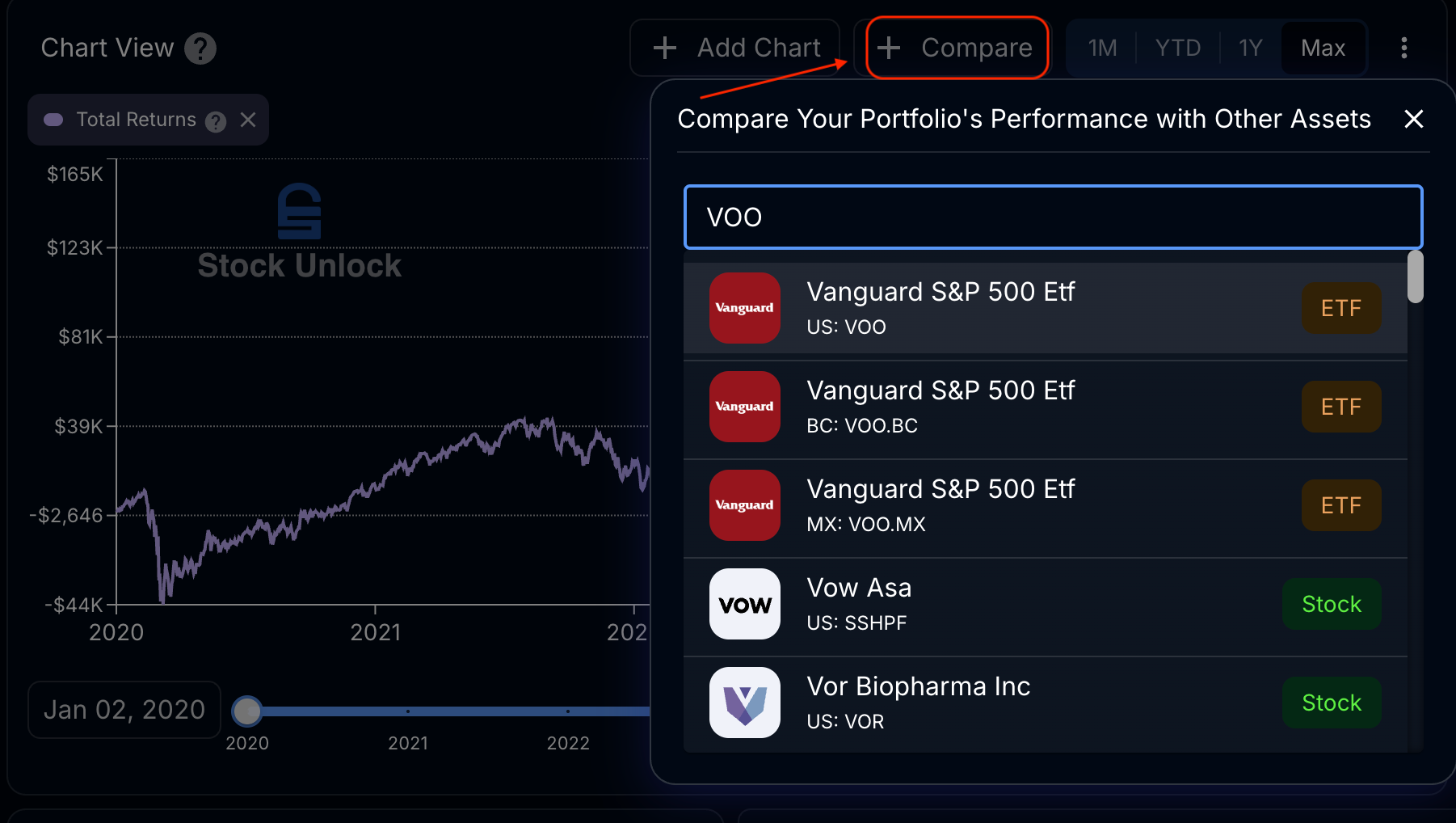
We just shipped a highly requested upgrade to the Stock Unlock web app. You can now compare your portfolio’s performance against any stock or ETF, directly inside your portfolio chart. What’s new: - Benchmark your portfolio against SPY, QQQ, VOO, or any ticker
-
Add multiple comparisons at once
- Find it in your portfolio → Compare button in the chart header
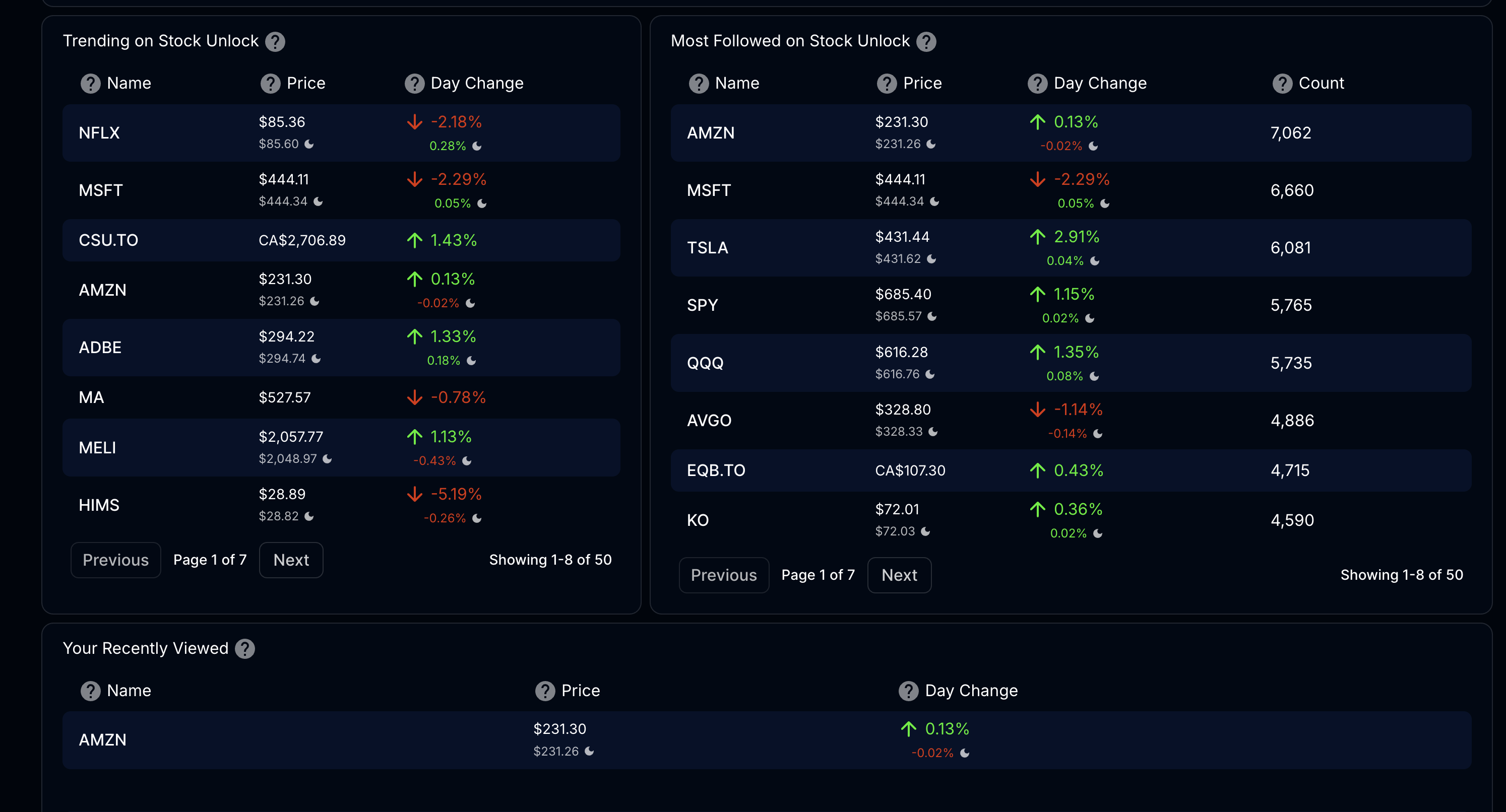
We also made a small but useful improvement on the Home page: - Trending, Most Followed, and Recently Viewed tables now show after-hours and pre-market price changes, so you’re not guessing outside market hours.
These updates are live on web now. |
The Death of the "Per-Seat" Business Model |
|
|
For decades, software valuation was driven by "seats": the number of human employees using the license. AI has broken this narrative. The winners of 2026 are those aggressively decoupling revenue from human headcount: 1. Salesforce (CRM): The Move to "Flex Credits"
Salesforce has fundamentally changed its pricing architecture with the introduction of Agentforce. By shifting from a purely per-user model to a consumption-based framework, the company makes sure its revenue scales with the volume of work performed by AI agents rather than the size of the client's workforce. -
The Details: Salesforce utilizes a $2 per conversation benchmark for customer-facing agents. However, for more granular automation, the company offers Flex Credits (approximately $0.10 per action). This allows enterprises to pay for specific AI tasks, such as updating CRM records or triaging support tickets, without requiring a human seat for every interaction.
- Strategic Impact: If a client reduces their support staff by 50% but doubles their automated customer interactions, Salesforce’s revenue actually increases. Salesforce is no longer a "headcount" play; it has become a "transaction volume" play.
2. ServiceNow (NOW): The "Outcome" Architect
ServiceNow has evolved from a traditional IT Service Management tool into what it describes as the "AI Control Tower" for business. While the company maintains "Pro" and "Enterprise" subscription tiers, its 2026 growth is increasingly driven by Agentic AI tiers that focus on the value of the final result. - The Details: The strategic focus has shifted to "Issue Resolution." High-end tiers are increasingly priced based on the AI’s ability to resolve complex IT or HR tickets autonomously. Instead of charging for the software itself, ServiceNow effectively captures a portion of the "labor savings" realized by the customer.
- Strategic Impact: The marginal cost of an AI resolving a server crash is minimal, but the value to the enterprise (avoiding downtime and reducing human labor) remains extremely high. This approach turns software from an expense into a measurable ROI engine.
3. Adobe (ADBE): The "Consumption" Leader
Adobe was an early mover in educating the market on Generative Credits. The company saw that different AI tasks (like generating high-resolution video versus editing a photo) required vastly different levels of compute power, so it implemented a model that aligns pricing with the actual intensity of usage. -
The Details: Creative Cloud plans now include monthly allocations of generative credits. Advanced features, such as those powered by the Firefly Video Model, consume credits at a higher rate. Once limits are reached, users must purchase "Credit Add-on" packs to continue using premium AI tools.
-
Strategic Impact: This consumption-based layer acts as a safeguard for margins. Almost zero capex for Adobe. Adobe can adjust credit costs to ensure that increased usage translates directly into incremental revenue. It is transitioning AI from a "research expense" into a direct revenue driver, which creates a highly scalable model that thrives as creative teams produce more content with fewer people.
|
The 2026 Moat: Data, Trust, and Complexity |
While many claim AI commoditizes software, certain "moats" have actually strengthened. Some examples: 1. Proprietary Data (Example: MSCI)
Data is a massive moat, but only if it is "clean" and "authoritative." MSCI is the gold standard here. They provide software, but also the indices and risk metrics that govern trillions of dollars. An LLM can't "hallucinate" a risk index. It needs MSCI’s proprietary methodology and historical datasets. In 2026, MSCI isn't just a data provider but rather a stamp of approval. They are the "validation layer" for AI-driven financial decisions. In the latest earnings call, MSCI’s management team was extremely bullish on their AI integration. They said it would boost revenue and minimize costs.
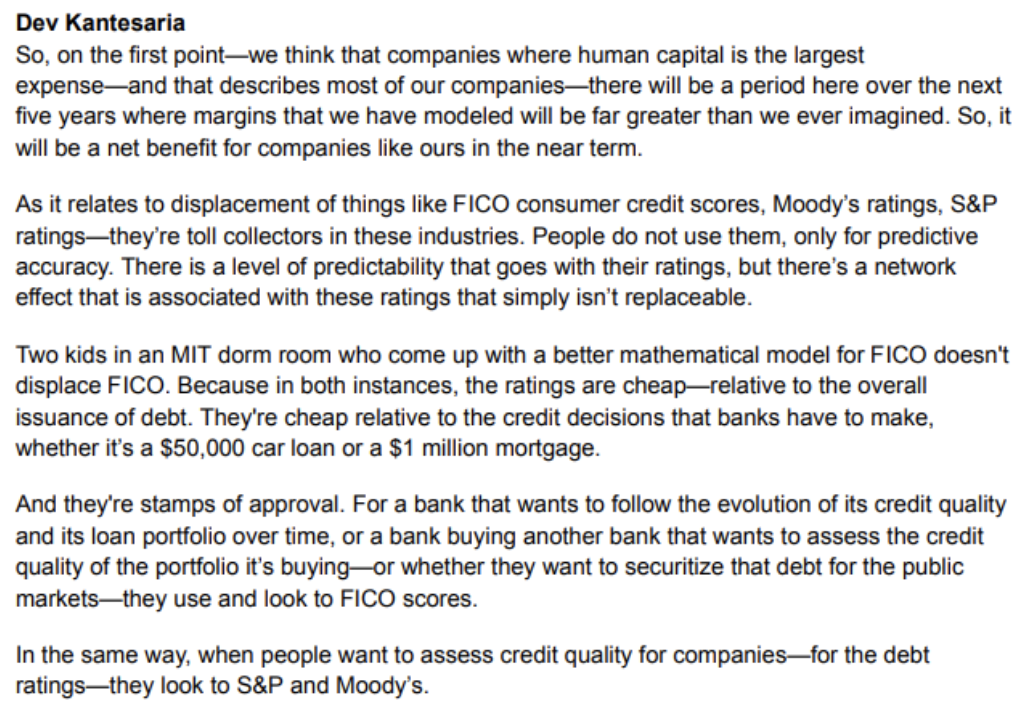
Here is what legendary investor Dev Kantesaria said about how AI will affect $FICO $SPGI $MCO:
|
2. The Criticality Moat (Example: Constellation Software)
Constellation Software (CSU) represents the ultimate "stickiness" moat. They acquire "Vertical Market Software", niche tools that run the mission-critical operations of a business (like a library’s management system or a public transit grid). These businesses are often too small or too complex for a generic AI startup to disrupt. The cost of switching away from a CSU-owned tool is far higher than the potential savings of a "cheaper" AI alternative. CSU's moat is entrenchment.
|
Monitoring AI Monetization: Key KPIs for 2026 |
To spot the winners of tomorrow, we move past traditional ratios and focus on Efficiency Ratios: -
Revenue per Employee: This is the ultimate "AI proof" metric. A true AI winner should be able to double revenue while keeping headcount flat. If a company needs to hire more sales reps to sell "automation," the automation isn't working. At the same time, you want the revenue to reaccelerate in 2026.
-
Inference Margin: AI costs money to run (compute). We can monitor whether gross margins stay stable as AI usage increases. This proves the company has optimized its model.
-
Customer Churn vs. Usage Intensity: In 2026, "Usage Intensity" is more important than "User Count." If humans are leaving the platform but AI agents are making 10x more API calls, the company is successfully transitioning to Digital Labor.
|
Red Flags: The "AI Wrapper" Trap |
The biggest risk in 2026 is the "AI Wrapper": companies that have no proprietary data and no mission-critical workflow. If a software product can be replaced by a clever prompt in a standard LLM (like GPT or Claude), that company has zero pricing power. It will collapse.
Another red flag is if a company spends more than 40% of its revenue on "Compute/Cloud costs" without owning a proprietary data set. They are essentially just a sales agent for the big hardware players (NVIDIA/Microsoft), and their margins will eventually be squeezed to zero. Some companies with red flags may appear cheap now. Do not buy "cheap" software. Buy the mission-critical platforms that own the data and have the courage to charge for outcomes. |
In 2026, the "Software is Eating the World" era has been replaced by the "AI is Changing the World" era. Monitoring the monetization structure is your most important task. Look for companies that own their data, protect their margins through efficient inference, and are bold enough to charge for outcomes rather than seats. The winners of 2027 and 2028 are being decided right now.
|
|
|
This newsletter was written by Christophe Nour. You can find him via YouTube, LinkedIn, view his portfolio on eToro, and join his investing coaching program on Skool.
Additionally, if you have any questions about this newsletter, you can send him an email at: christophe.nour@icloud.com |
|
|
Stock Unlock's newsletter is not a recommendation to buy or sell stocks. Stock Unlock does not provide financial advice, and we are writing this newsletter to help share ideas and teach you more about stock analysis. Please do not buy or sell stocks we discuss without doing your own research and/or consulting with a professional. |
|
|
In addition to providing education around investing fundamentals we are exploring adding value through sending our members stock ideas and analysis. Please let us know if you enjoy this type of newsletter or have any feedback. Let us know what you think by emailing support@stockunlock.com |
|
|
📱 Now Available on iOS and Android |
|
|
Join 5,000+ Investors on Discord |
| |
|
Connect with us on LinkedIn |
| |
|
|