
Dick’s Sporting Goods Stock Plunges 29% as Foot Locker Forces Guidance Cut

By Brian McCormick ·
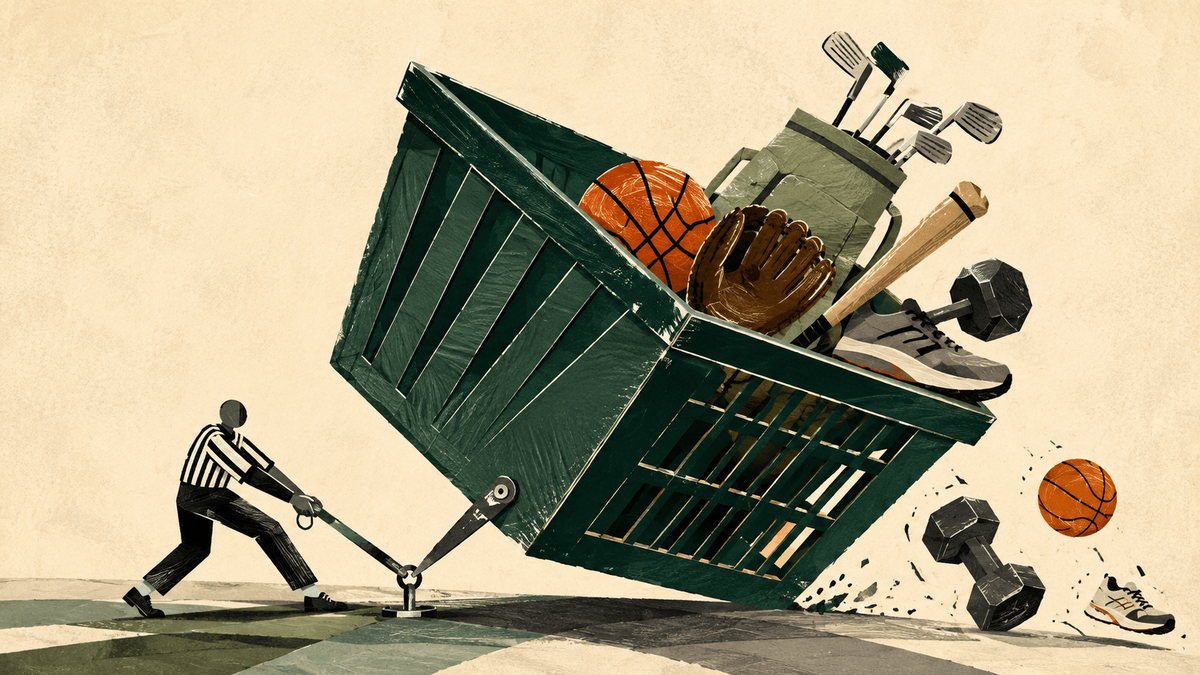
Foot Locker’s turnaround went sharply into reverse, forcing Dick’s to cut its full-year earnings outlook by roughly 18% at the midpoint.
Dick’s Sporting Goods stock plunged nearly 29% to roughly $128 as of about 12:30 p.m. ET Tuesday after the retailer’s second-quarter results came in below analyst expectations and it sharply cut its full-year guidance.
The quarterly miss was fairly modest, but the new forecast exposed a much larger change in expected earnings. The main second-quarter numbers were:
- Adjusted earnings: $3.53 per share, compared with $3.76 expected and $4.38 a year earlier
- Net sales: $5.59 billion, compared with $5.65 billion expected
- Adjusted operating margin: 8.1%, down from 13.0% a year earlier
The year-over-year figures require some caution because Dick’s did not own Foot Locker in the prior-year quarter. Still, the lower earnings and narrower margin show why the acquisition has become the central issue for investors. Foot Locker, acquired for $2.5 billion less than a year ago, drove most of the guidance reset.
Foot Locker went from expected profit to expected loss
The core Dick’s business remained healthy. Its second-quarter results included:
- Net sales: $3.85 billion, up 5.6% year over year
- Comparable sales: up 4.9%, compared with 5.0% growth a year earlier
- Segment profit: $485.2 million, up 2.2% from $475.0 million a year earlier
“Our growth outpaced the broader industry by nearly 200 basis points,” CEO Lauren Hobart said on the earnings call. Growth was broad across categories and received an additional lift from the FIFA World Cup. Management also kept the segment’s full-year comparable-sales outlook at 2.5% to 4% growth.
Foot Locker went the other way:
- Net sales: $1.74 billion
- Pro forma comparable sales: down 3.6%, compared with a 2.2% decline a year earlier and 0.6% growth in the first quarter
- Segment result: a $31.9 million loss, compared with a $17.5 million profit in the first quarter
The sharpest change appeared in Foot Locker’s full-year outlook:
- Comparable sales: previously expected to rise 1.5% to 3%; now expected to decline as much as 2% or remain flat
- Segment profit: previously expected at $110 million to $150 million; now expected to be a loss of $40 million to $80 million
Using the midpoints, Foot Locker’s expected annual contribution deteriorated by $190 million, moving from a $130 million profit to a $60 million loss. Management had raised its comparable sales expectations in May, so such a sharp reversal also cast doubt on how much progress the turnaround had actually made.
Why weaker sneaker sales hit profits so hard
Foot Locker relies heavily on footwear launches and established sneaker styles to bring customers into its stores. According to Dick’s, fewer products launched in the second quarter, those that arrived sold below company and industry expectations, and demand for legacy styles weakened.
Executive Chairman Ed Stack framed the problem as a shift in what shoppers want. “The consumer is looking for products that are new, innovative, different in the marketplace,” he said. Older footwear silhouettes that had sold well for years slowed quickly, while newer running, performance and emerging-brand products remained healthier.
Once unwanted shoes begin stacking up, retailers cut prices to move them. Fewer full-price sales squeeze revenue and gross margin at the same time, while rent and other store costs remain. Even a modest sales decline can push the segment into a loss quickly.
“We’re not leading this margin erosion,” Stack said, explaining that Dick’s and Foot Locker were matching marketplace prices where necessary to protect market share.
The broader Dick’s business has more ways to absorb a soft sneaker cycle through sporting equipment, apparel, golf, team sports and newer store concepts. Foot Locker’s assortment gives it fewer alternatives.
Tuesday’s trading suggests the footwear weakness extends beyond one retailer. Nike shares fell about 3%, and On Holding, Adidas and Puma also declined, even as the broader market was roughly flat to higher. Dick’s fell much further after its own guidance cut showed how much that weakness could reduce earnings from the Foot Locker acquisition.
The guidance cut changes the near-term investment case
Dick’s made two major cuts to its consolidated full-year outlook:
- Adjusted earnings per share: $11 to $12, down from $13.50 to $14.50. The midpoint fell 18%, from $14 to $11.50.
- Adjusted operating income: $1.46 billion to $1.56 billion, down from $1.71 billion to $1.83 billion. The midpoint fell $260 million, from $1.77 billion to $1.51 billion.
Foot Locker’s $190 million midpoint swing explains roughly three-quarters of the reduction in expected adjusted operating income. Pressure has reached the core business as well: Dick’s lowered its segment-profit outlook to $1.54 billion to $1.60 billion from $1.60 billion to $1.68 billion, even while leaving comparable-sales guidance unchanged.
Strong customer demand does less for earnings when retailers must discount more heavily to win each sale. The core Dick’s banner remains healthy, but the credibility and near-term economics of the Foot Locker turnaround have changed. Its store reset and merchandise work now have to overcome a weaker sneaker cycle, excess inventory and heavier promotions.
Management nevertheless defended the longer-term thesis. “We are still early in the Foot Locker turnaround,” Stack said. He pointed to better performance at remodeled Fast Break stores, a broader apparel assortment and increased marketing as reasons the business can eventually improve.
The next useful evidence will come from Foot Locker’s inventory levels, merchandise margins and comparable sales. Until those improve together, the market may value the acquisition as an earnings drag rather than the growth opportunity Dick’s expected.